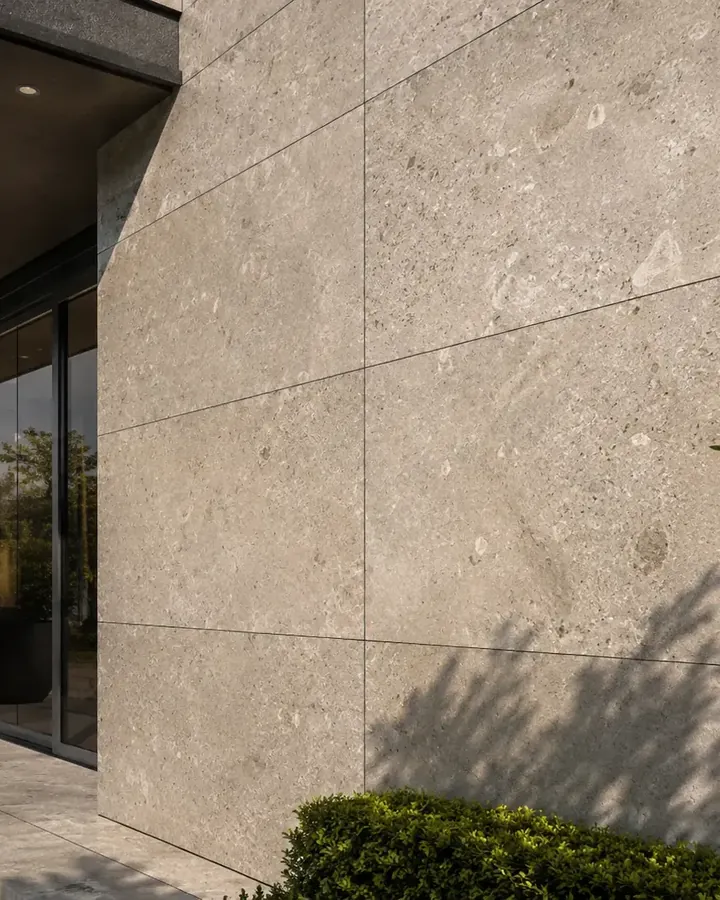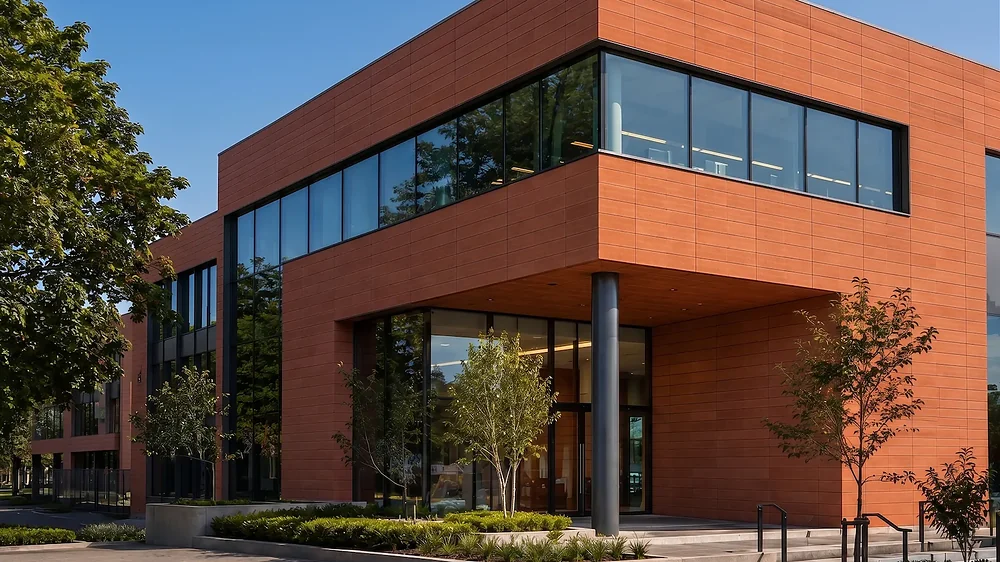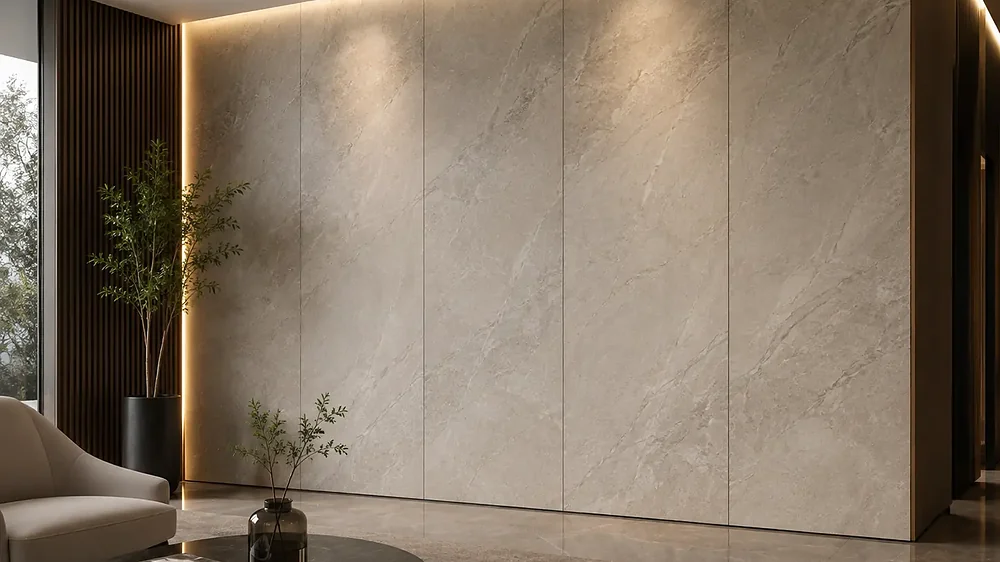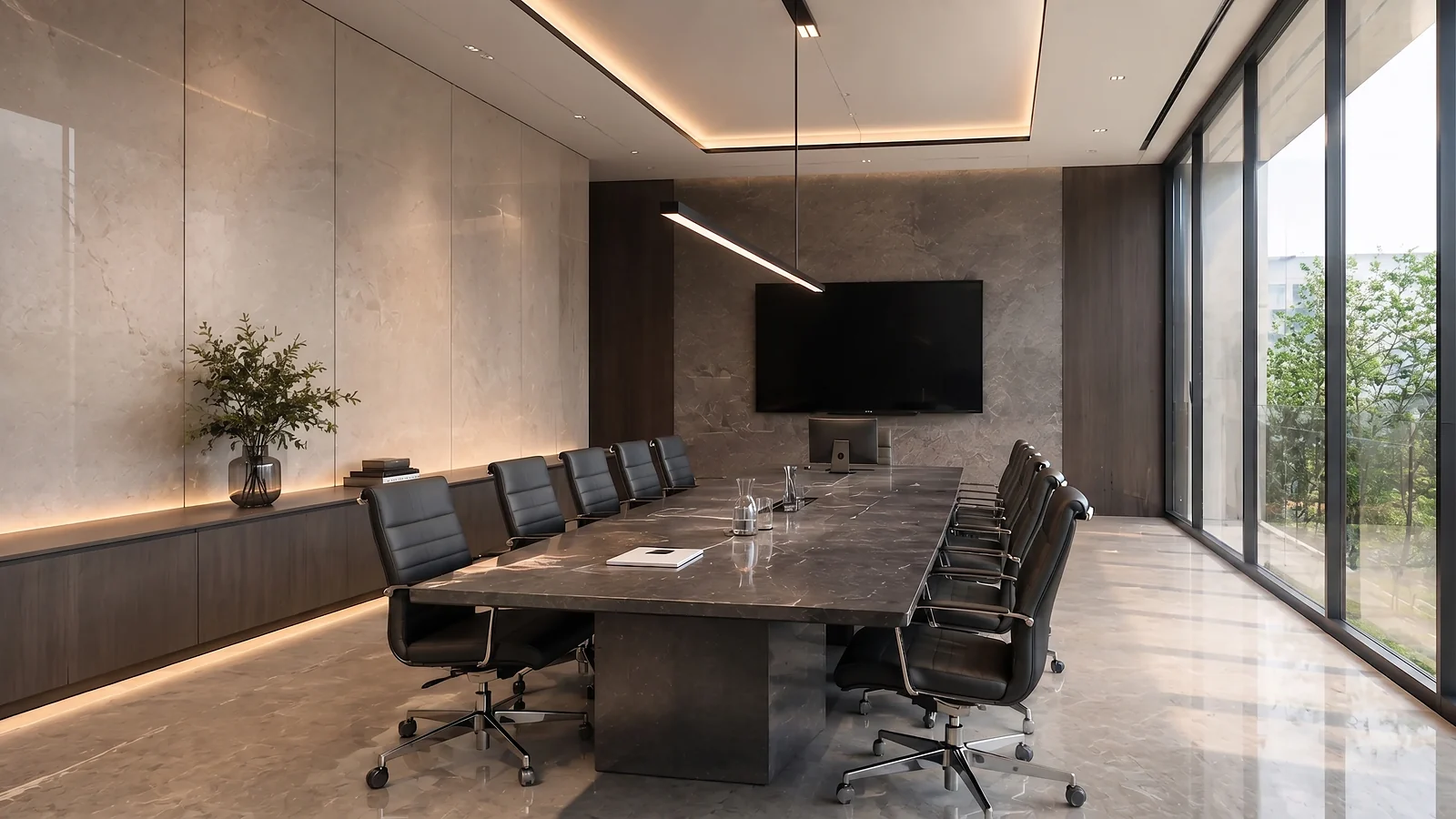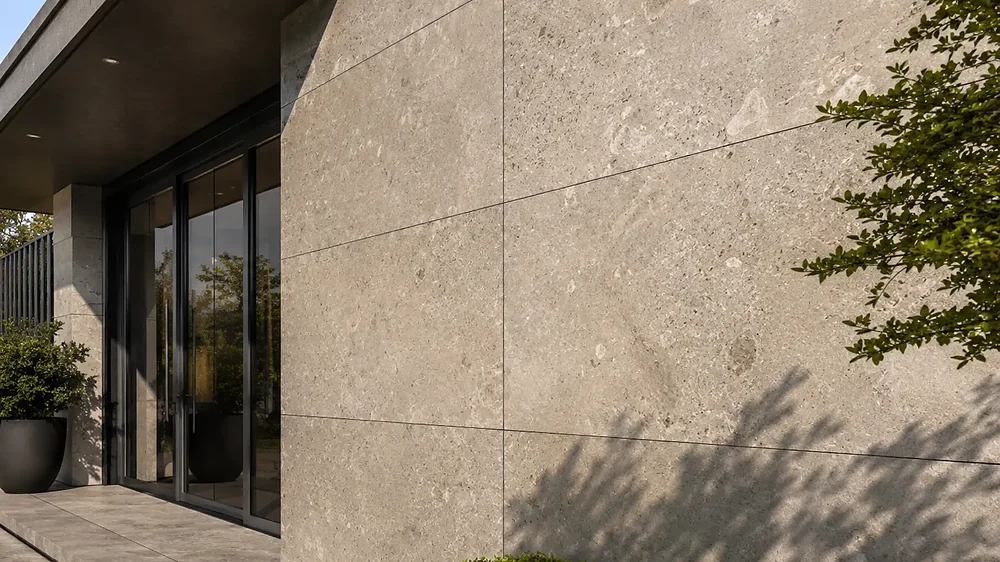
Both stone cladding and natural stone veneer give a wall the depth and texture of stone. The difference is in what you are installing: veneer is thin slices of quarried stone set one by one, while cladding is engineered panels or tiles that carry a stone face in larger, lighter, more consistent units.
Choose veneer when authenticity of the material itself matters most. Choose cladding when speed, weight, consistency and budget matter as much as the look.
The look
Natural veneer has unrepeatable variation because every piece came out of the ground. Good cladding captures the same texture: split-face, ribbed, travertine-like or smooth slab. It does so with controlled color, so long elevations look even.
Our Stone Claddings bring natural texture, depth and timeless elegance to walls and façades. You can see ribbed travertine, split-face sandstone and granite looks side by side in Find your finish.
Weight and structure
Natural stone is heavy. Even thin veneer can require a scratch coat, lath and sometimes structural checks, especially on upper floors or retrofits. Lighter cladding systems put far less load on the wall. That opens up projects where stone would otherwise be impractical, such as interior feature walls on framed partitions and upper-story accents.
Installation
| Natural stone veneer | Stone cladding | |
|---|---|---|
| Units | Many small, irregular pieces | Larger panels or tiles |
| Skill | Experienced mason, lots of cutting | Fewer cuts, repeatable fixing |
| Speed | Slower | Faster |
| Waste | Higher | Lower |
Speed matters on any site, but it matters most when weather windows are short or the rest of the program is waiting on the façade.
Cost drivers
Material cost is only part of the picture. Labor, waste, scaffolding time and structural work often decide the real number. For most residential and light commercial projects, cladding lands at a lower installed cost. Natural veneer competes when only a small area is needed or when the stone itself is the point.
Upkeep
Both are low maintenance. Natural stone may need sealing in some uses, and porous stones can stain. Engineered cladding faces are typically designed to resist staining and weathering. Either way, a gentle wash is usually all that is needed. See our cladding care guide.
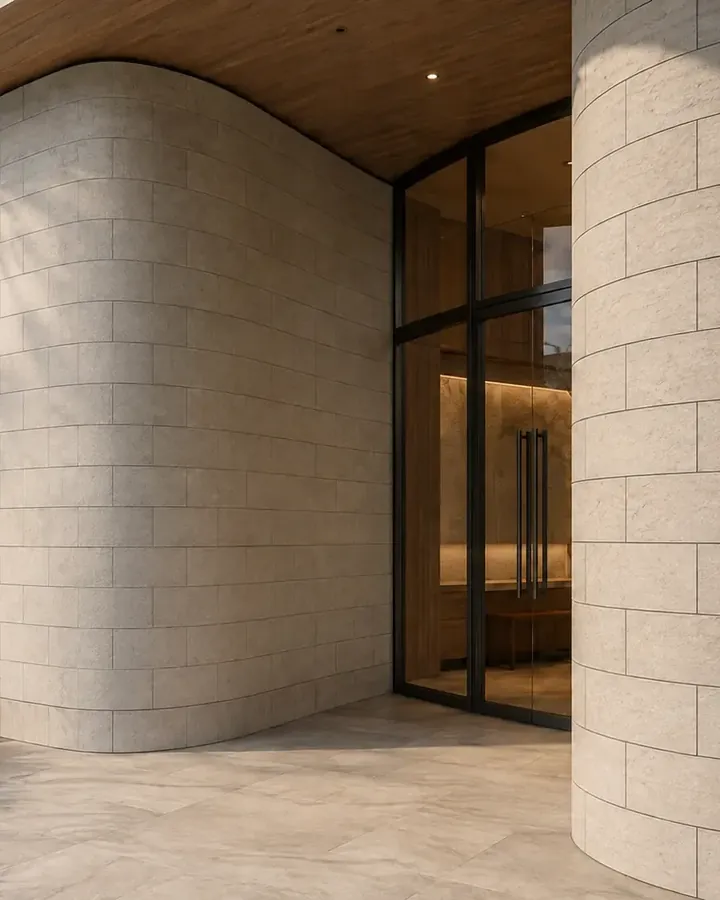
Curves and columns
Rigid stone struggles on curves. For round columns or curved walls, consider Flexible Tiles. They are thin and lightweight and follow curved surfaces while keeping a stone-like face. Our article on flexible tiles for curved walls covers the details.
How to decide
- Choose natural veneer for heritage settings, small high-touch areas or when the material story is essential.
- Choose stone cladding for large elevations, tight programs, framed walls and budgets that need predictability.
Not sure which finish suits your elevation? Request samples of two or three stone looks and compare them on site in daylight.
Frequently asked questions
Is stone cladding cheaper than natural stone veneer?
Often, once installation is included. Cladding panels cover more area per piece, need less skilled cutting and fitting, and are lighter to handle, which reduces labor time. Material prices vary by finish, so compare installed cost per square foot rather than material cost alone.
Can stone cladding be used outdoors?
Yes. Exterior-rated stone cladding is designed for façades and garden walls. Check that the product and its fixing method are approved for exterior use on your wall type.
Does stone cladding look fake?
Quality cladding reproduces the texture, color variation and shadow of real stone closely. The giveaway is usually repetition, so choose products with enough face variation and lay them to avoid obvious patterns.