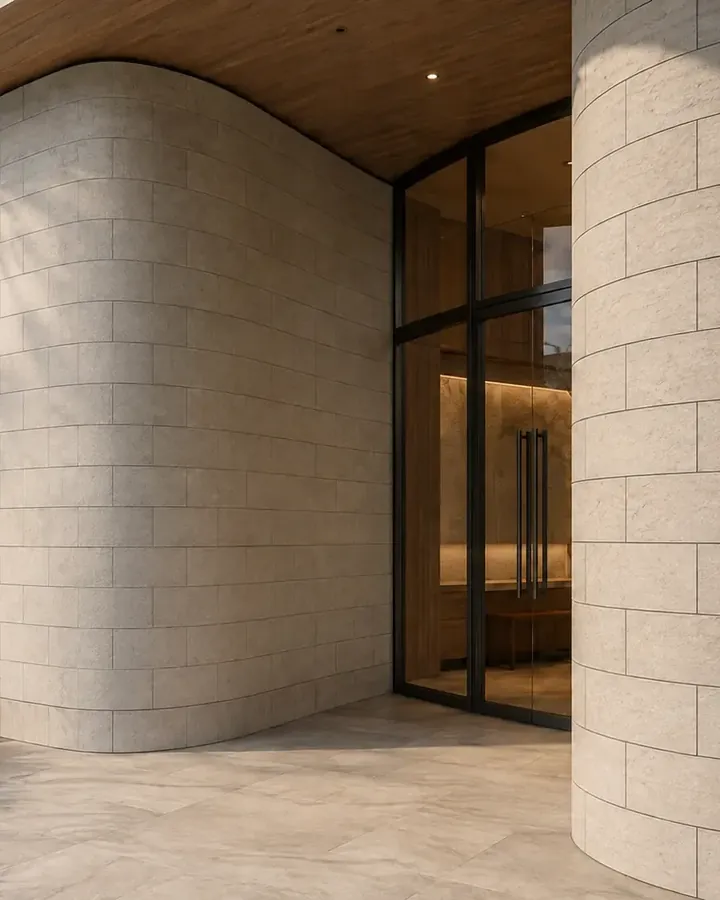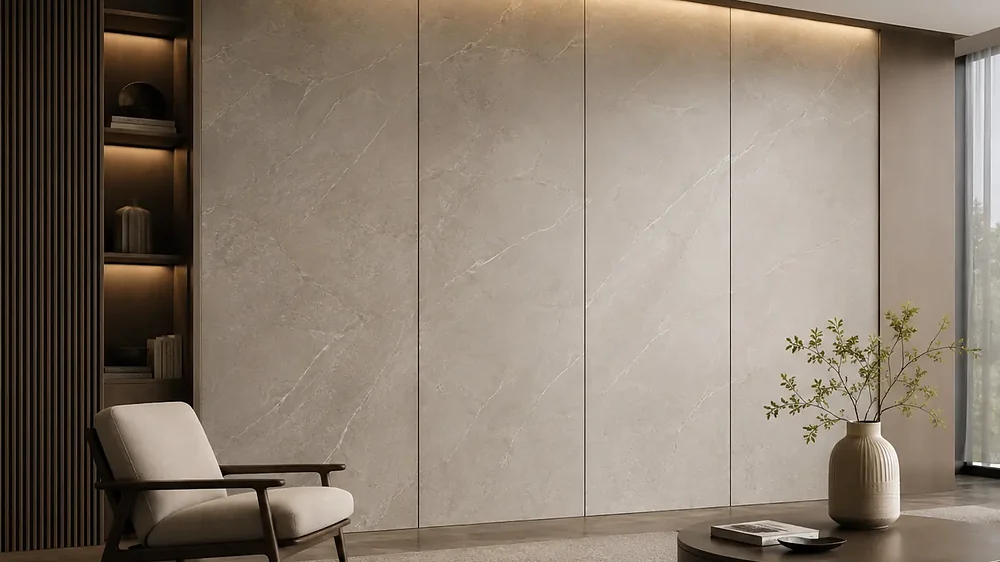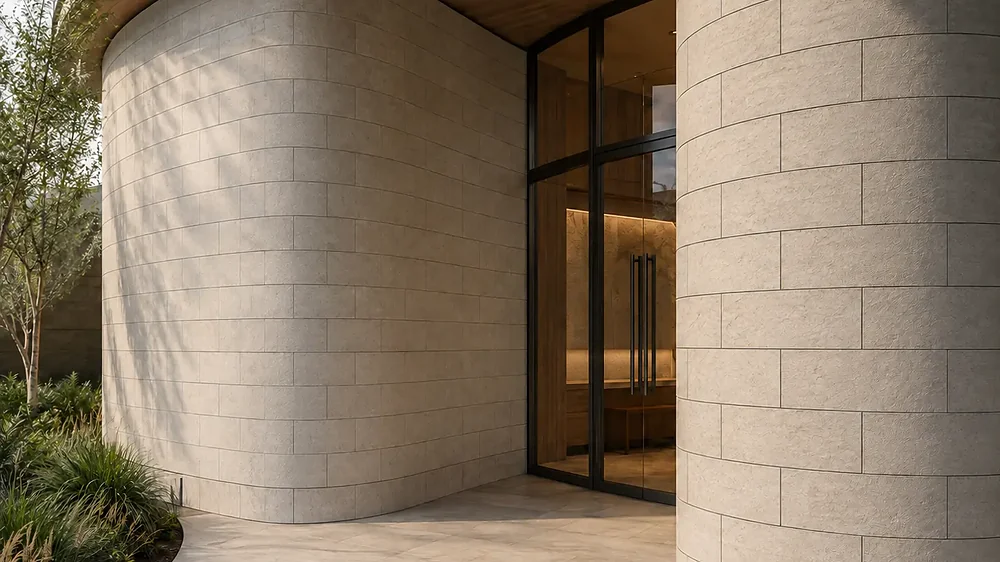
Flexible tiles are thin, lightweight tiles that bend. They let you wrap a stone, brick or textured finish around curved walls, round columns and soft corners. Rigid stone and ceramic would have to be cut into dozens of facets to do the same, or couldn't do it at all.
What makes them different
Conventional cladding is stiff. To clad a curve you either facet it or bend a substructure behind it. Our Flexible Tiles are thin, lightweight tiles that adapt easily to flat and curved surfaces. They give the look of a solid material with the behavior of a sheet.
Where they shine
- Round columns in lobbies, porches and colonnades.
- Curved walls at entrances, reception desks and stair cores.
- Soft corners and bullnoses where a crisp miter would chip.
- Lightweight retrofits over existing walls where load matters.
- Furniture and joinery such as bar fronts and planters.
Installation in brief
- Prepare a smooth, sound substrate. Every bump telegraphs through a thin tile.
- Use the specified adhesive. Interior and exterior systems differ.
- Work from the center of the curve. Lay out joints so they read evenly around the radius.
- Respect the minimum radius. Ask for it before detailing tight curves.
Flexible tiles vs. rigid stone
| Flexible tiles | Rigid stone or ceramic | |
|---|---|---|
| Curves | Follow the surface | Faceted or custom-cut |
| Weight | Light | Heavy |
| Speed | Fast on complex shapes | Slow on curves |
| Best for | Columns, curves, retrofits | Flat, heavy-duty surfaces |
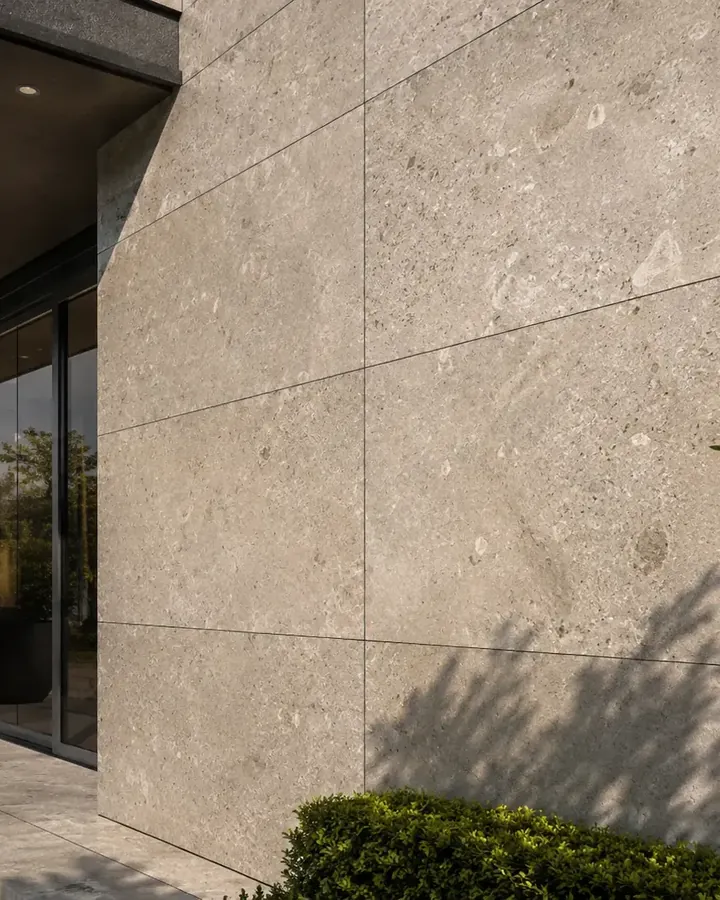
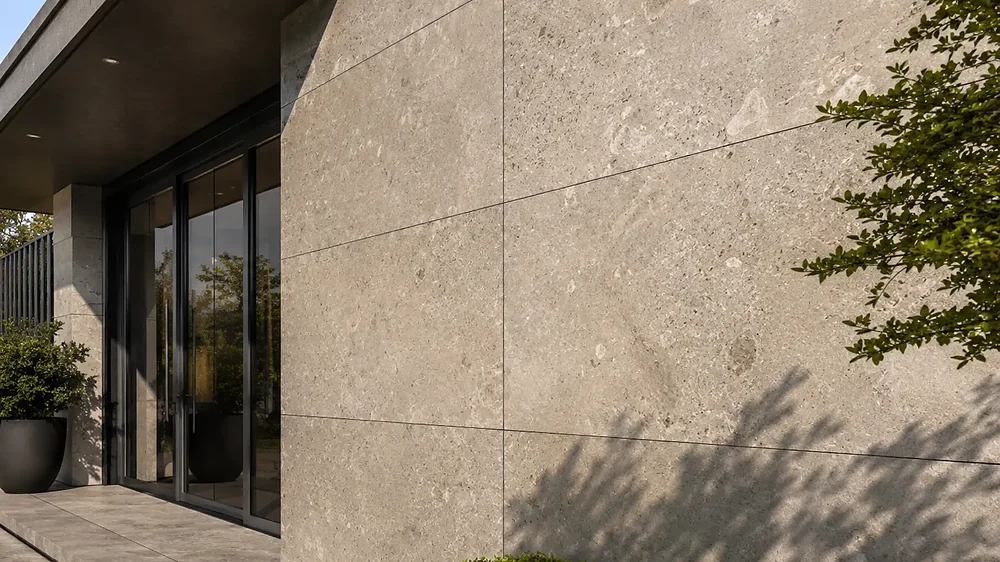
For flat feature walls and façades, Stone Claddings remain a strong choice. Many projects use both: cladding on the planes and flexible tiles where the geometry turns. Our comparison of stone cladding and natural veneer covers the flat-wall decision.
Design tips
- Keep joint patterns simple on tight curves; busy patterns exaggerate distortion.
- Light, warm tones flatter curves because they show soft shading.
- Wrap the material slightly past the curve onto the flat so the transition looks intentional.
Have a curved detail in mind? Send us your drawings and we will suggest suitable finishes and the right sample set.
Frequently asked questions
What are flexible tiles made of?
Flexible tiles are thin, lightweight surface materials, often based on modified clay or mineral compounds, that can bend to follow curved surfaces while carrying a stone, brick or textured finish.
Can flexible tiles be used outside?
Many flexible tiles are suitable for exterior walls. Check the product's exterior rating and use the recommended adhesive and substrate preparation for outdoor installation.
How tight a curve can flexible tiles follow?
It depends on the tile thickness and format. Gentle curves and round columns are typical uses. For tight radii, ask for the minimum bending radius of the specific product before you design the detail.