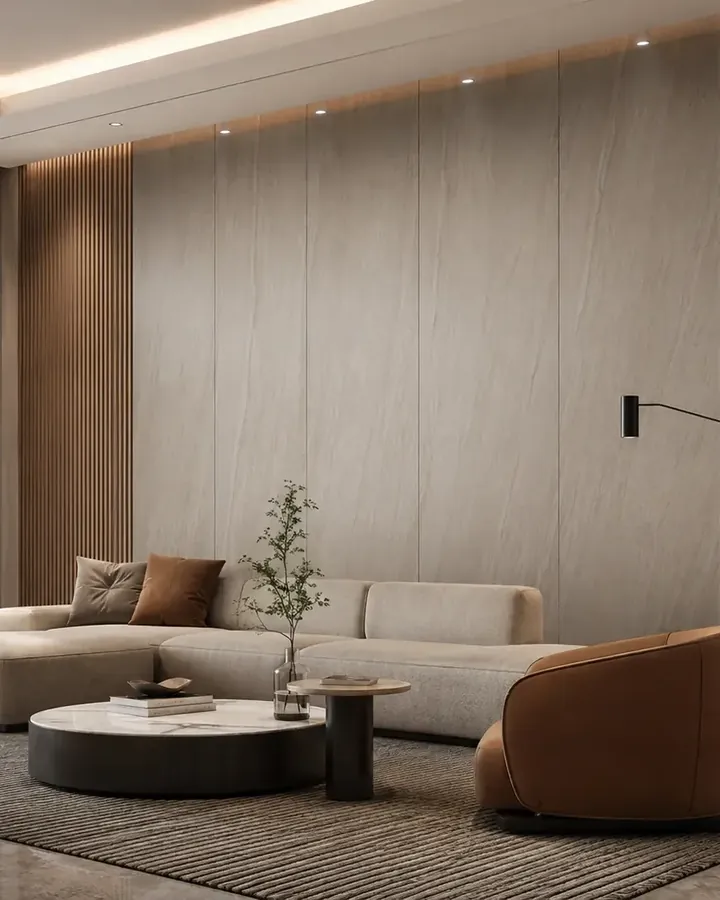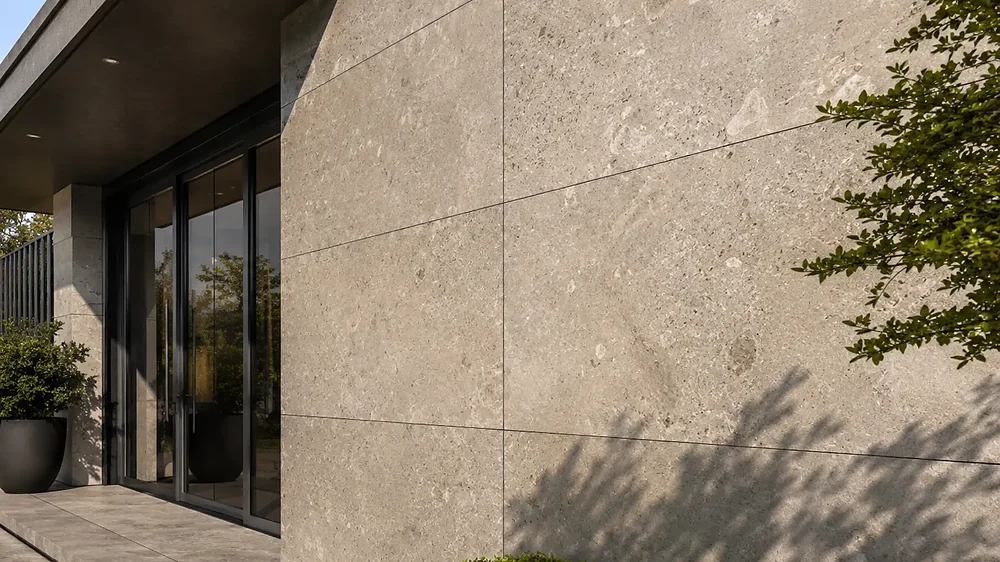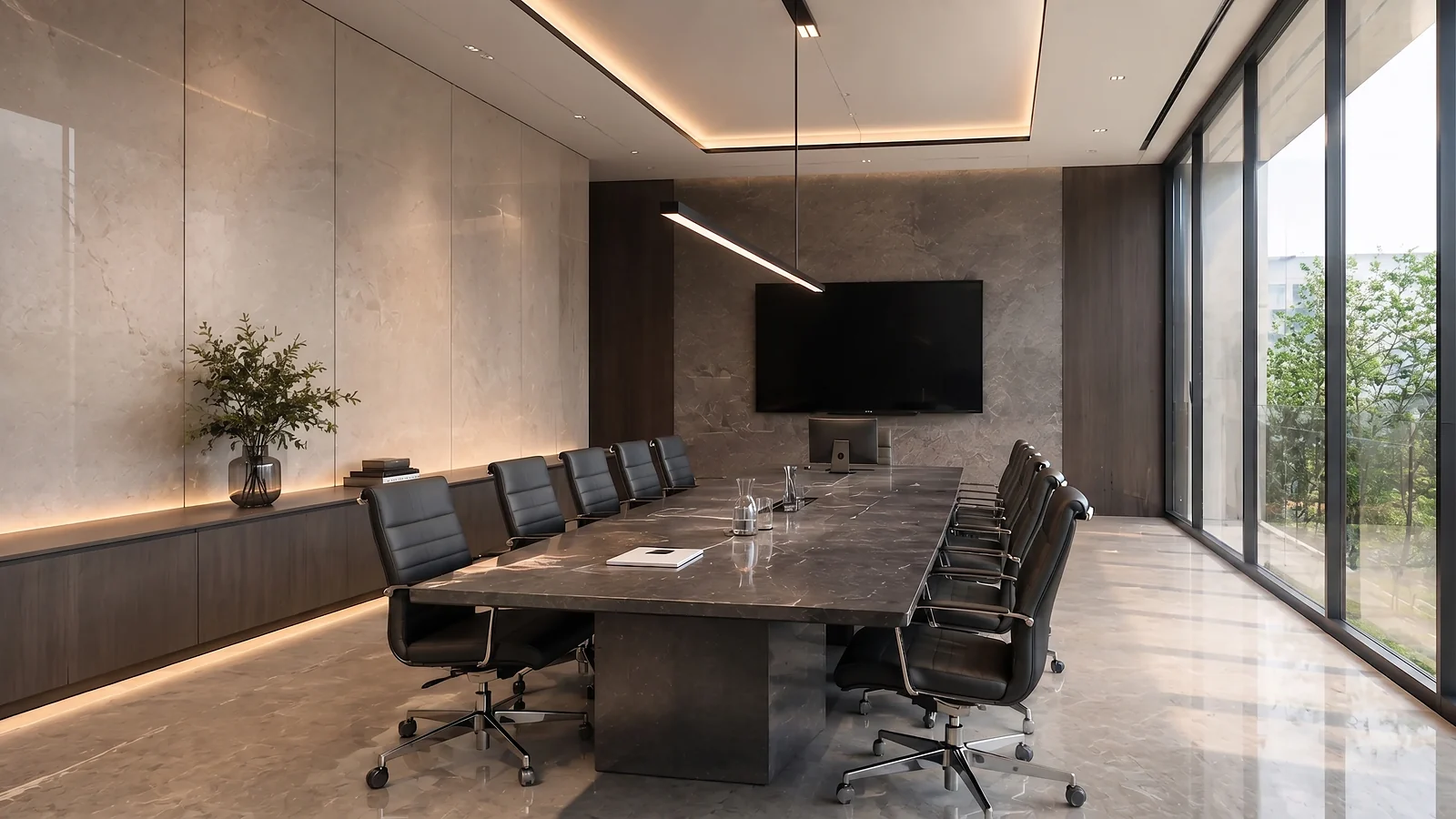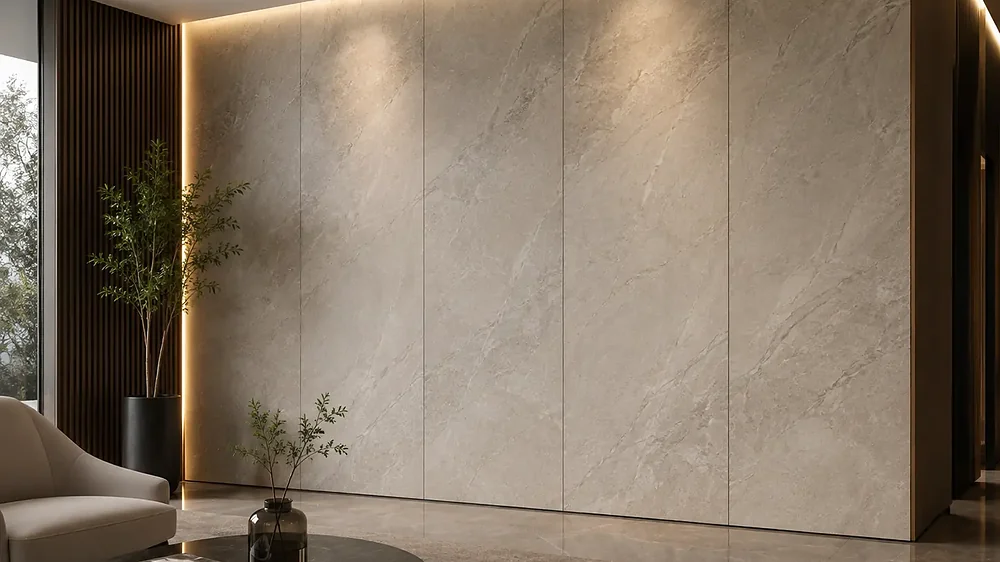
SPC wall panels are decorative panels with a dense stone-plastic composite core and a printed or textured stone or wood face. They are water-resistant, dimensionally stable and quick to install, which is why they have become a go-to for bathrooms, kitchens and busy commercial interiors.
Why SPC works indoors
Interior walls face moisture, knocks and cleaning chemicals. SPC handles all three well. Its dense core resists swelling, and its surface wipes clean without grout lines collecting dirt. Our SPC Wall Panels are water-resistant decorative panels with a premium stone or wood finish.
Best places to use it
- Bathrooms and powder rooms. Full-height stone looks without heavy slabs.
- Kitchens and break rooms. Easy-clean backsplash and feature walls.
- Hotels and hospitality. Fast refurbishment between bookings, with consistent finishes room to room.
- Clinics and offices. Hygienic, wipeable surfaces with a calm, premium look.
- Retail. Feature walls that can change with the brand.
Where to be careful
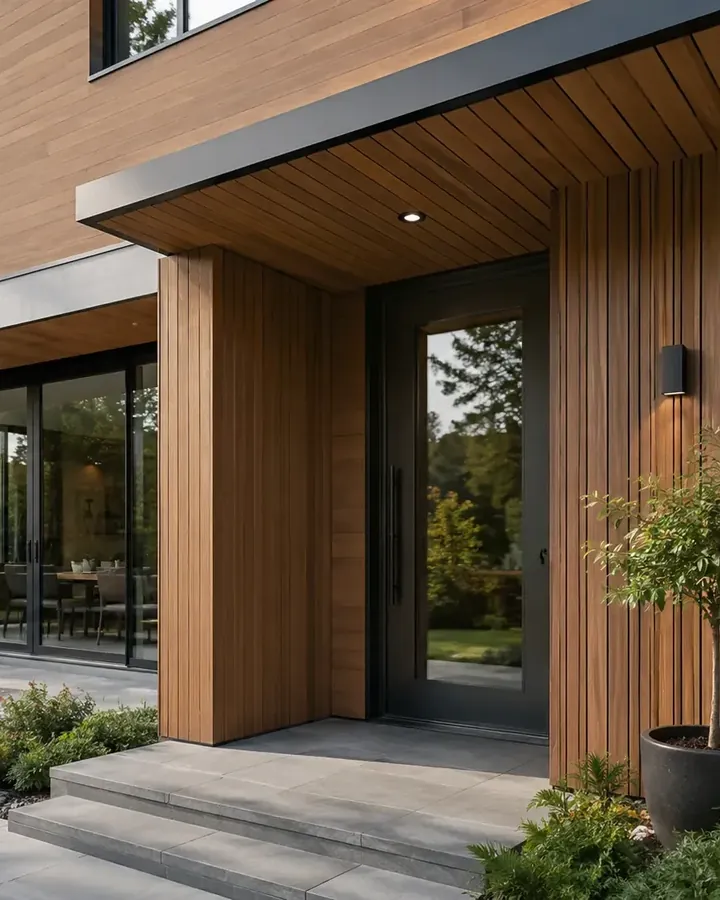
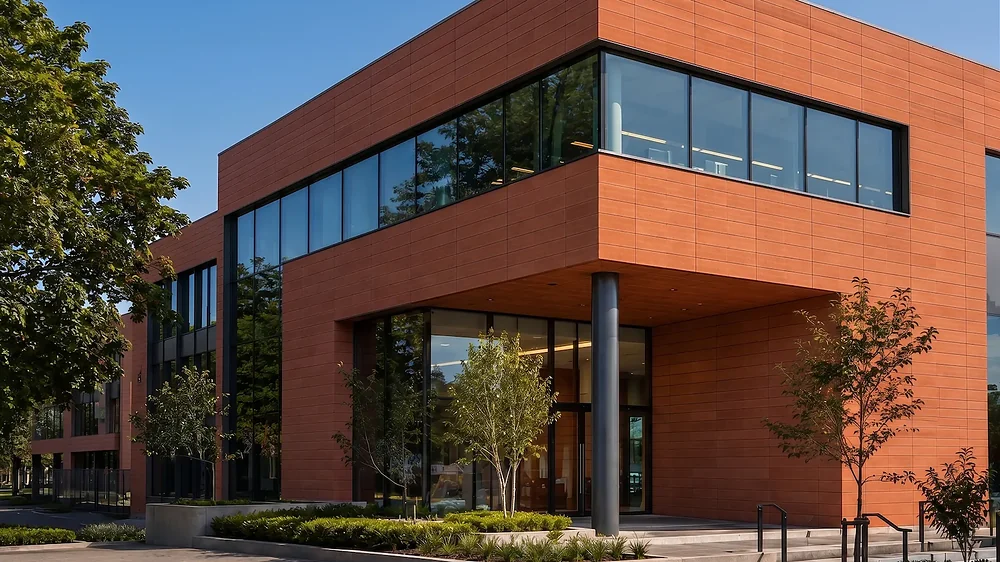
SPC is an interior product in most ranges. For exteriors, look at WPC Panels or a façade system. Inside, the risks come from details, not the panel: unsealed cut edges in showers, gaps at floor junctions and fixings into weak substrates.
Installation basics
- Prepare the wall. It should be flat, dry and sound. Fix loose plaster or hollow tile first.
- Plan the layout. Start from a center line or a feature point so cuts are balanced at the edges.
- Fix as specified. Use the recommended adhesive or clip system.
- Finish the edges. Use trims and sealants at corners, floors and around fixtures.
Choosing a finish
Stone looks make small rooms feel calm and expensive; wood looks add warmth to lounges and corridors. Light finishes bounce light in windowless rooms. Darker slate or umber tones create drama in hospitality spaces. Compare a few options in Find your finish, then request samples to see them under the room's actual lighting.
SPC or tile?
Tile is still excellent where you want a specific ceramic or a handmade look. SPC wins on speed, fewer joints, lower weight and easier refurbishment. For projects with tight programs, especially occupied buildings, that speed often decides it.
Frequently asked questions
Are SPC wall panels waterproof?
SPC panels are highly water-resistant, which makes them a strong choice for bathrooms, kitchens and other damp interiors. In showers and other areas of direct, constant water, follow the manufacturer's detailing for joints, edges and sealants.
Can SPC panels go over existing tile?
In many cases, yes, provided the existing surface is sound, flat and well bonded. Remove anything loose or hollow first, and check the installation guidance for the adhesive or fixing system you plan to use.
What is the difference between SPC and WPC panels?
SPC uses a stone-plastic composite core that is dense and very stable, which suits interiors with humidity and heavy use. WPC uses a wood-plastic composite that delivers a warm, wood-look surface and is often chosen for both interior and exterior applications.