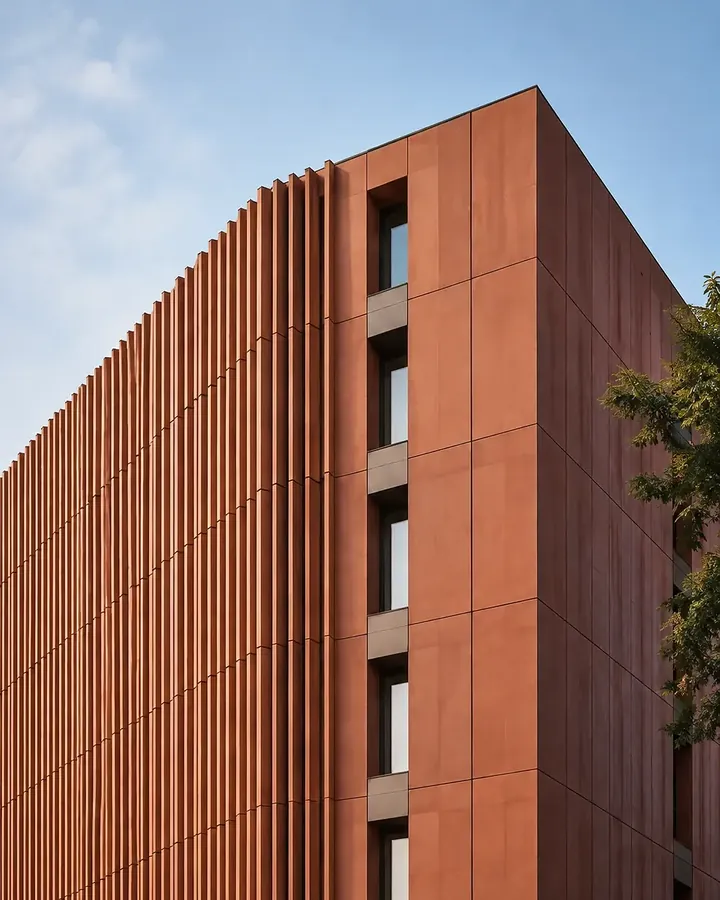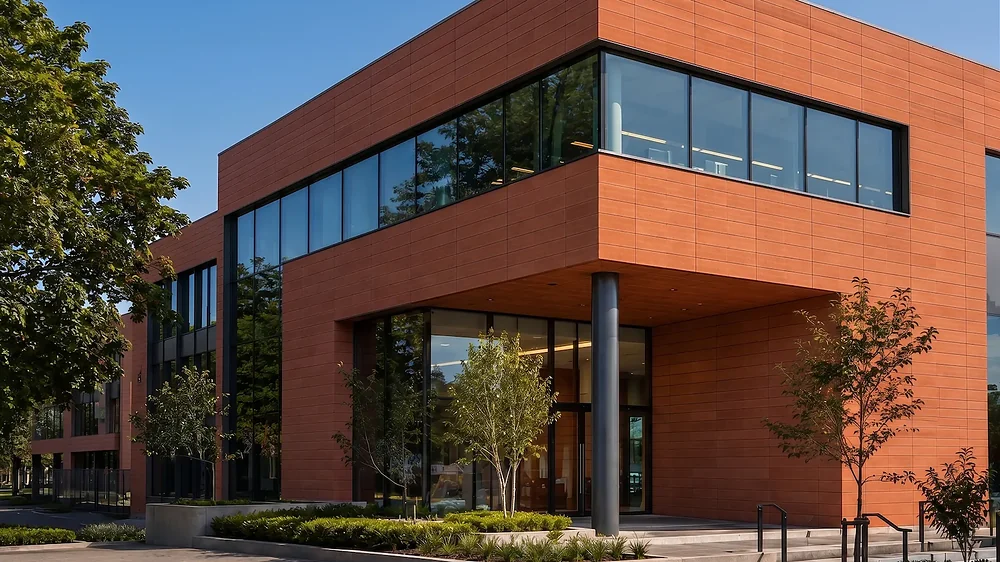
Terracotta cladding is a façade made from fired clay units fixed to a building, usually as a ventilated rainscreen. It gives a building the warmth of brick with the precision of a modern panel system, and because the color is fired into the clay, it holds its tone for decades with almost no upkeep.
This guide explains how it works, where it performs best in the US, and what to ask before you specify it.
What terracotta cladding is
Terracotta means "baked earth." Clay is shaped, dried and fired at high temperature until it becomes a hard, dense ceramic. For façades, that ceramic is formed into units designed to hang on a support system rather than to carry load like structural brick.
The result is a lightweight-feeling exterior with the depth of a masonry material. Our Terracotta Claddings are a natural clay-based façade system made for warm, timeless exteriors.
How it is installed: the rainscreen principle
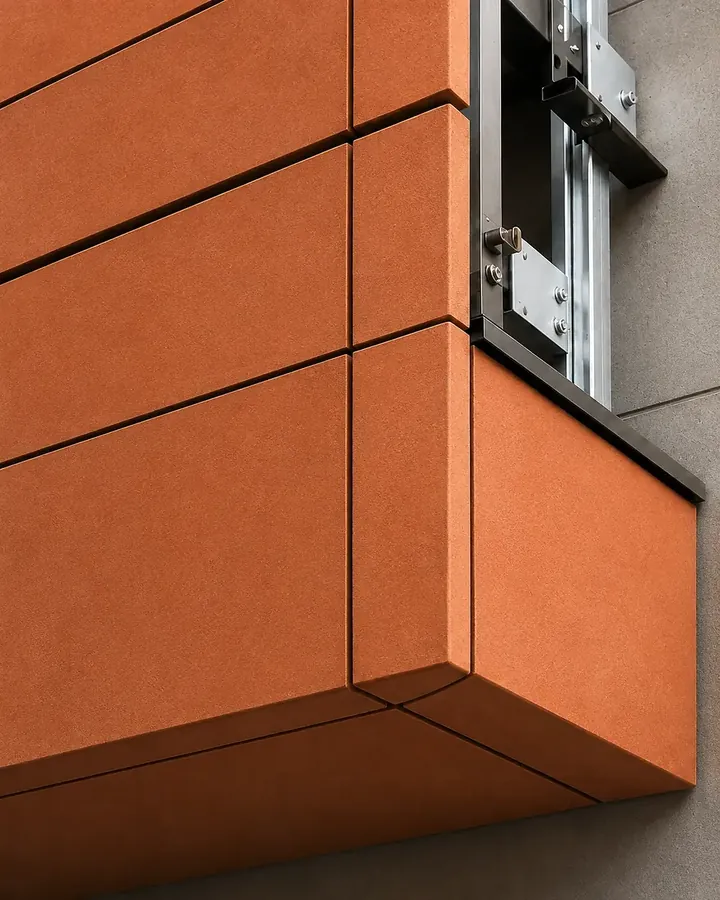
Most modern terracotta goes up as a rainscreen. The clay units are clipped or hung on aluminum rails, leaving a ventilated cavity between the cladding and the weather-resistive barrier behind it. Rain that passes the open joints runs down the cavity and drains out; air movement dries what remains.
That layered approach is why terracotta suits climates with hot summers, heavy storms and humid air, like much of the Southeast. The cladding takes the sun and the rain; the wall behind stays dry and protected.
Panels or claddings?
| Terracotta panels | Profiled terracotta claddings | |
|---|---|---|
| Look | Clean, flat planes and crisp joints | Fluted, ribbed or wave textures with strong shadow |
| Best for | Offices, schools, civic buildings, calm elevations | Entrances, feature walls, landmark façades |
| Character | Restrained, modular | Expressive, tactile |
Terracotta Panels give modular façades with clean lines and natural warmth. Profiled claddings trade a little calm for a lot of character. Many projects combine both: panels for the main elevation, profiles at the entrance.
Color and finish
Because pigment is part of the clay body, terracotta ranges from pale sand to deep oxide red, and textures from smooth to sandblasted. Choose finishes in daylight, at the scale they will be seen. A swatch that looks deep on a desk can read lighter across a 60-foot elevation. Our guide to choosing finishes online explains how to narrow a shortlist before samples arrive.
What drives cost
Terracotta is priced per project. The main variables are:
- Format and profile. Larger or more complex profiles cost more to make and install.
- Finish. Glazed and specialty textures add cost over natural finishes.
- Substructure. Rail systems, brackets and fixings are a significant share of the budget.
- Building geometry. Corners, returns and openings add cutting and detailing time.
Codes and fire performance
Fired clay itself is a noncombustible material, but codes look at the whole wall assembly, including the barrier and insulation behind the cladding. Our article on cladding fire codes explains NFPA 285 and ASTM E84 in plain English. Always confirm requirements with your design team and local building official.
Questions to ask before you specify
- Which formats and profiles suit the elevation and the budget?
- What rail and fixing system is recommended for the wall type?
- How are corners, window heads and sills detailed?
- What is the lead time for the chosen finish?
- Can we see a physical sample and, for larger projects, a mock-up panel?
If you are weighing finishes now, request samples and we will send the closest matches to your design intent.
Frequently asked questions
Is terracotta cladding durable?
Yes. Fired clay is dimensionally stable, resists UV fading because its color runs through the body rather than sitting in a coating, and copes well with heat, rain and freeze-thaw when installed as a ventilated rainscreen with the right fixings and joints.
What is the difference between terracotta panels and terracotta claddings?
Both are fired clay. Panels are typically larger, flat or lightly profiled modules that read as clean planes on a façade, while claddings cover a wider family of formats and textures, including fluted, ribbed and wave profiles that create shadow and depth.
Does terracotta cladding need maintenance?
Very little. An occasional rinse with water and a soft brush removes dirt and organic growth. There is no paint or stain to renew, which is one of the main reasons architects specify it for long-life buildings.