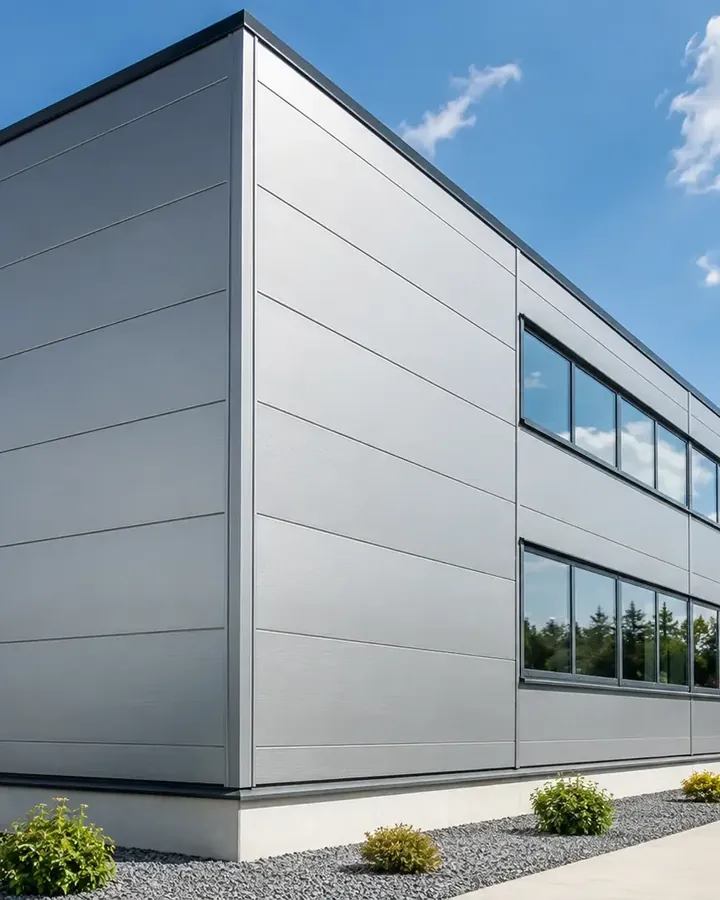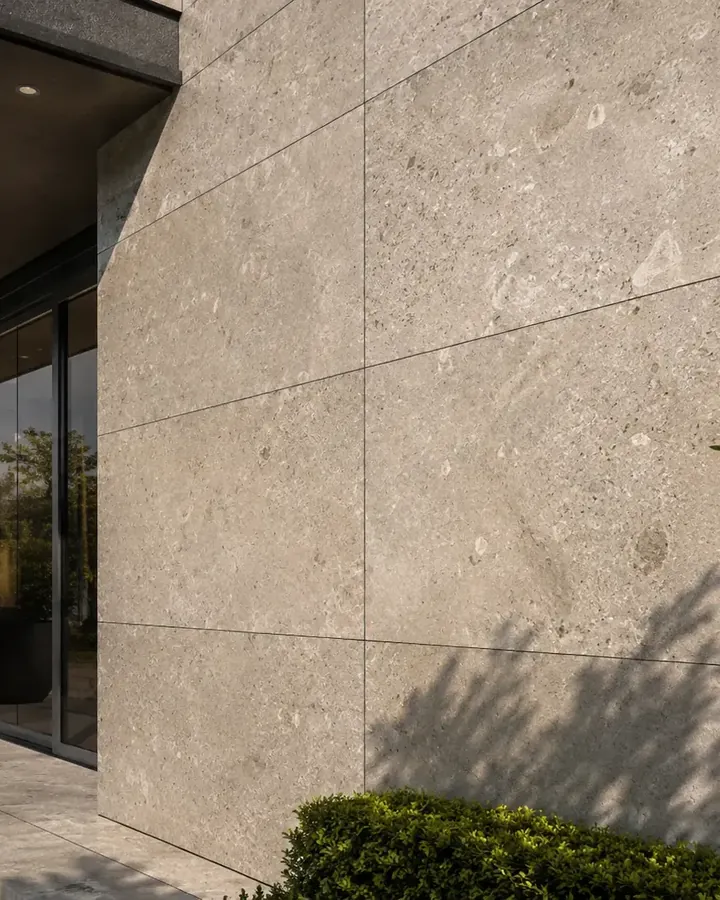
US building codes treat cladding as part of a wall assembly, not as a product in isolation. Two tests come up again and again: ASTM E84, which rates how flame spreads across a material's surface, and NFPA 285, which tests whether fire spreads up and across a complete exterior wall.
This guide explains both in plain English. It is general information, not a code review. Confirm requirements for your project with your architect, fire engineer and local building official.
Which code applies
Most US jurisdictions build to the IBC, adopted at state or local level, often with amendments. Georgia, for example, adopts the IBC with state amendments, so confirm the edition and any local changes with your building department before you finalize a specification.
The IBC's construction types matter here. Types I and II are noncombustible construction, Type III has noncombustible exterior walls, and Type IV is heavy timber or mass timber. Type V is combustible construction and is treated differently for exterior wall fire testing.
ASTM E84: surface burning
ASTM E84, often called the tunnel test, measures a material's flame spread index and smoke-developed index. Ratings fall into classes:
| Class | Flame spread index |
|---|---|
| A | 0–25 |
| B | 26–75 |
| C | 76–200 |
Many interior finishes and some exterior components are specified by E84 class. It is a material test, so it tells you about a surface, not about how a whole wall behaves in a fire.
NFPA 285: the whole wall
NFPA 285 is a large-scale test of an exterior wall assembly containing combustible components. A fire is started at a simulated window opening, and the test checks whether flames spread vertically and laterally beyond set limits.
Under the IBC, NFPA 285 can be triggered on Type I, II, III and IV buildings by combustible components such as:
- combustible water-resistive barriers on walls above 40 feet,
- foam plastic insulation in the wall,
- certain combustible claddings, metal composite materials and high-pressure laminates above set heights.
The 2024 IBC also gathered these triggers into a single section and added requirements for some newer systems. Your design team will check which provisions apply to your building.
Why "assembly" matters
Because NFPA 285 tests a complete wall, a cladding, insulation or barrier cannot simply be labeled "NFPA 285 compliant" on its own. Results belong to the tested assembly. Changes to the assembly, such as a different insulation, may need engineering judgment based on tested data. Ask suppliers for the actual tested assemblies and reports, not just a statement.
Material behavior in brief
- Fired clay (terracotta) and mineral-based stone looks are inherently resistant to burning. The rest of the wall assembly still needs review.
- Insulated panels (sandwich panels) depend heavily on their core. Choose the core with the building's classification in mind.
- Composites and polymers need particular care on taller buildings.
Questions to ask your supplier
- What is the material's ASTM E84 classification, with the report?
- Has it been tested in an NFPA 285 assembly? Which assembly, exactly?
- What insulation, barrier and substructure were in that assembly?
- Are there height or construction-type limits on its use?
- Can you share installation details that match the tested assembly?
We are happy to share available test documentation for our products and to work alongside your design team. Contact us with your project details.
Frequently asked questions
What is NFPA 285?
NFPA 285 is a large-scale fire test that evaluates how fire spreads vertically and laterally across an exterior wall assembly containing combustible components. It tests the whole assembly, including cladding, insulation, air and water barriers and details, rather than a single product.
What does ASTM E84 Class A mean?
ASTM E84, also called the tunnel test, measures how quickly flame spreads across a material's surface and how much smoke it produces. Class A means a flame spread index of 0 to 25, Class B is 26 to 75 and Class C is 76 to 200.
Can a product be NFPA 285 compliant on its own?
Not strictly. NFPA 285 results apply to the specific tested wall assembly. A product can be part of a compliant assembly, and approved variations may be allowed by engineering analysis, but the result belongs to the assembly rather than to the product alone.