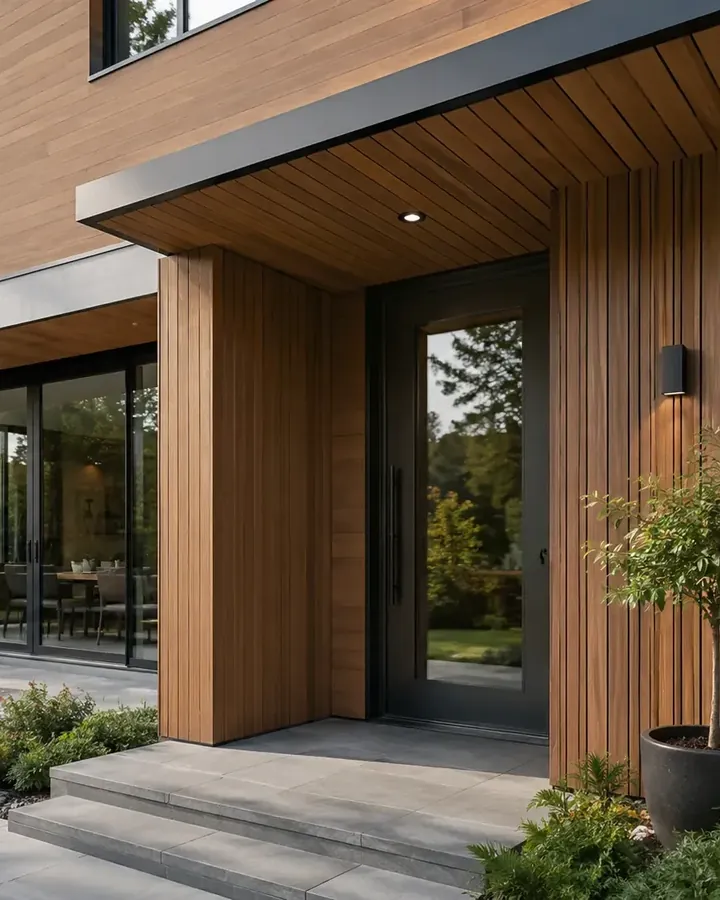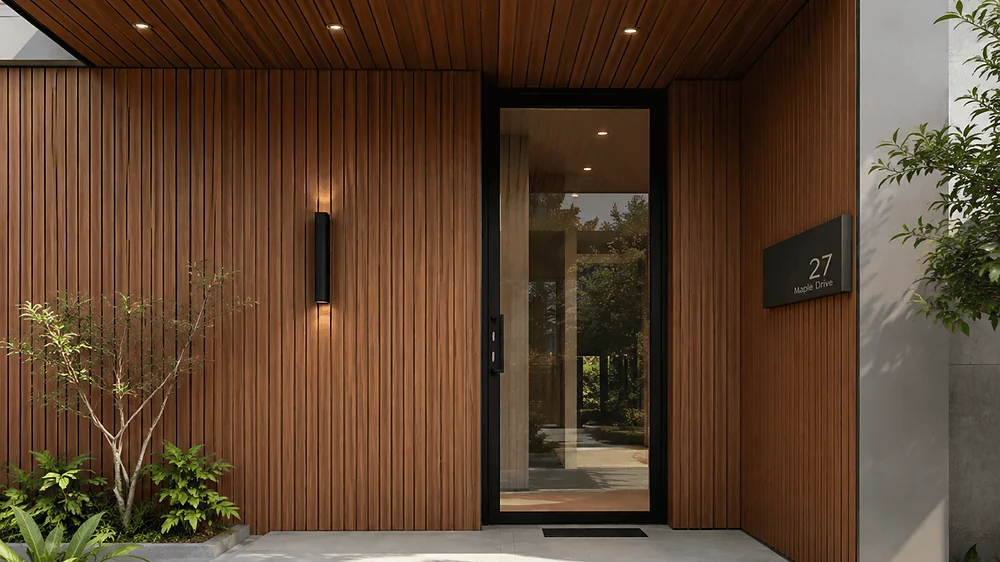
WPC cladding (wood-plastic composite) gives a building the warm look of timber without the sanding, staining and rot risk that come with real wood. In hot, humid climates like Georgia's, it performs well when it is detailed for heat movement, ventilation and storm-driven rain.
Why WPC suits the South
Southern exteriors face three things at once: long periods of high humidity, intense summer sun and sudden heavy rain. Natural timber needs a regular maintenance cycle to cope. WPC's polymer-bound core resists moisture uptake and decay, and its finish does not need recoating. Our WPC Panels are low-maintenance wood-look panels for indoor and outdoor applications.
Detail 1: ventilation
Fix WPC on battens so there is a continuous air gap behind it. Air moving through the cavity carries away heat and moisture, keeping the boards and the wall behind them dry. Leave openings at the top and bottom of the cavity, protected with insect mesh.
Detail 2: expansion and fixings
Composites expand and contract with temperature more than masonry does. Plan for it:
- Use the manufacturer's clips or screws, never adhesives alone.
- Leave end gaps between boards and at trims, sized for the installation temperature.
- Avoid locking both ends of a long board; let it move.
Detail 3: water management
Summer storms drive rain sideways. Install a quality weather-resistive barrier behind the cavity, flash window heads and sills properly, and keep the bottom of the cladding at least a few inches above grade so splash-back and standing water don't sit against it.
Choosing a color for strong sun
Very dark colors absorb more heat and move more. Very light colors can show dirt. Mid-tones such as teak, walnut and driftwood tend to look best for longest. You can compare these finishes in Find your finish.
Mixing materials
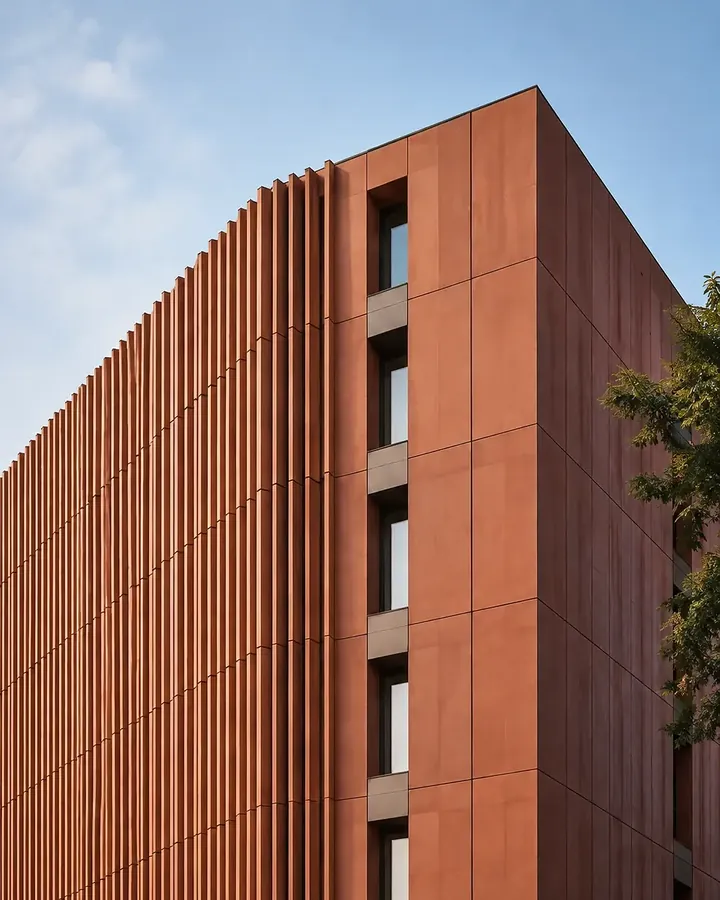
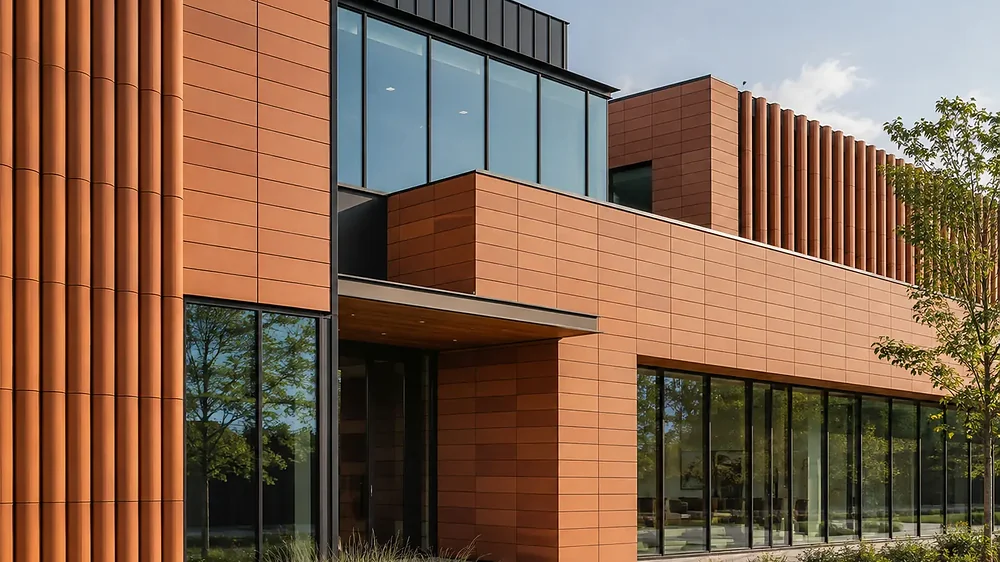
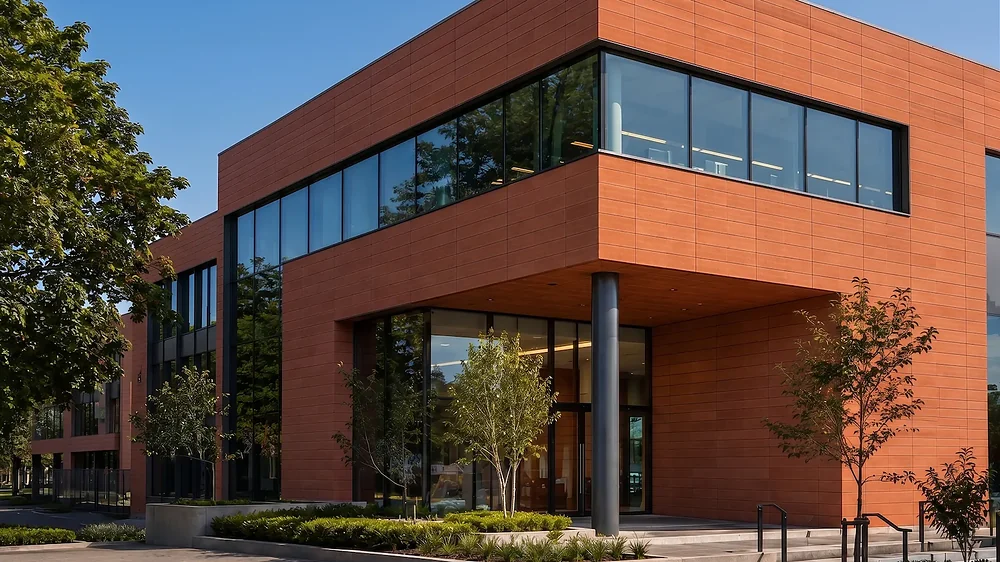
WPC pairs well with masonry-like materials. A popular Southern combination is wood-look cladding at entrances and soffits with terracotta or stone on the main walls. It gives warmth at eye level and durability where the weather hits hardest.
Care
A wash with mild soapy water and a soft brush once or twice a year keeps WPC looking new. Avoid aggressive pressure washing close to the surface. Our cladding maintenance guide covers each material.
Planning an exterior in the Southeast? Ask us for samples and installation guidance for your wall type.
Frequently asked questions
Does WPC cladding rot in humid weather?
WPC is far more resistant to rot than natural timber because its wood content is encapsulated in a polymer matrix. Good ventilation behind the boards and correct drainage details help it perform at its best in humid climates.
Does WPC fade in strong sun?
All exterior materials change slightly under strong UV. Quality WPC is formulated to limit fading, and the change is gradual and even. Mid-tone colors tend to show the least visible change over time.
How much expansion gap does WPC need?
It depends on the board length, the product and the installation temperature. Follow the manufacturer's gap table, and leave more space when boards are installed on cool mornings that will later heat up in direct sun.