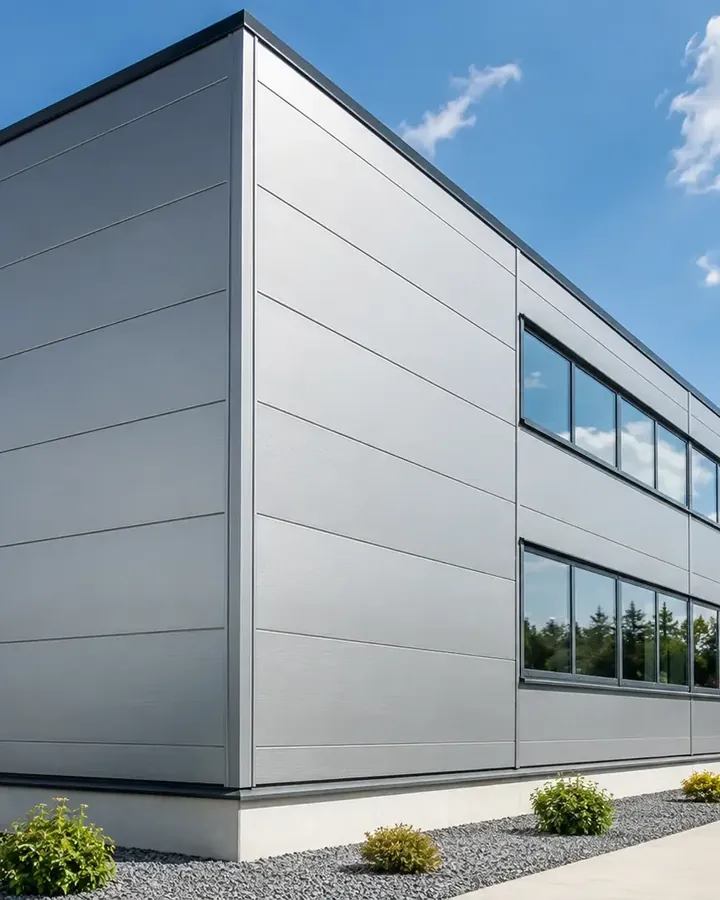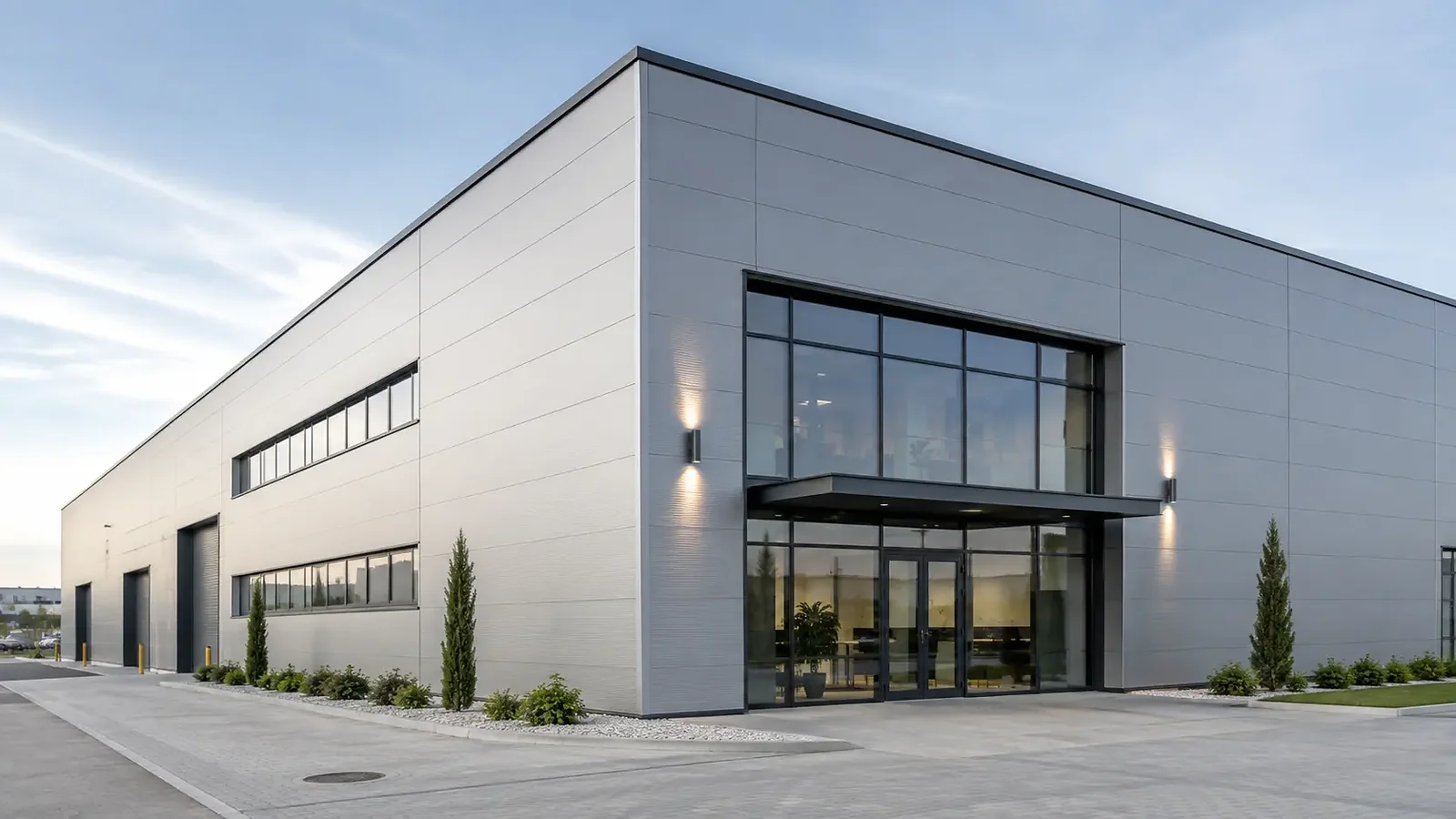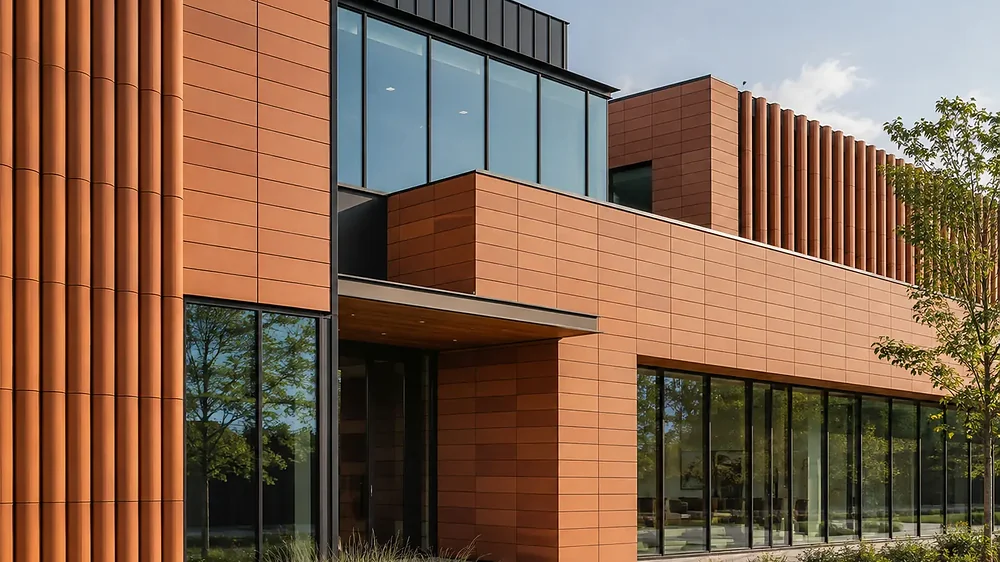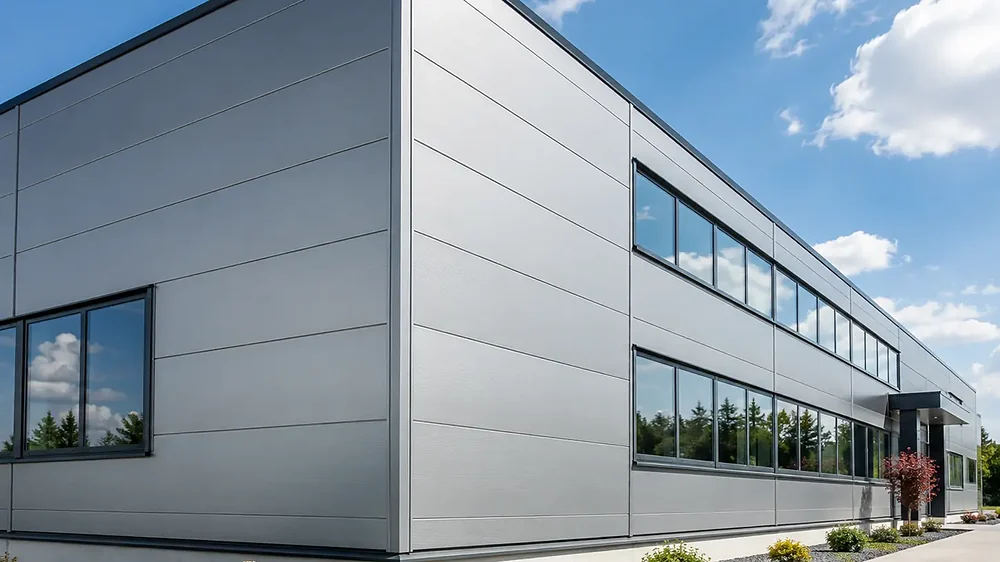
Sandwich wall panels, also called insulated metal panels, combine an exterior skin, an insulating core and an interior skin in one factory-made component. Hung on a steel frame, they close a building in quickly, insulate it and give it a clean, finished face inside and out.
How they work
Each panel is a structural "sandwich." Two thin steel skins are bonded to a rigid insulating core, and together they behave like a stiff beam. The panels span between girts or purlins and lock together at side joints that seal against air and water. Our Sandwich Wall Panels are insulated panels offering strong, lightweight, energy-efficient wall construction.
Where they make sense
- Warehouses and distribution centers. Large walls, tight programs.
- Workshops and light industrial units. Durable, wipeable interiors.
- Cold storage and food facilities. Continuous insulation and hygienic faces.
- Offices and showrooms. Modern, flat façades with crisp lines.
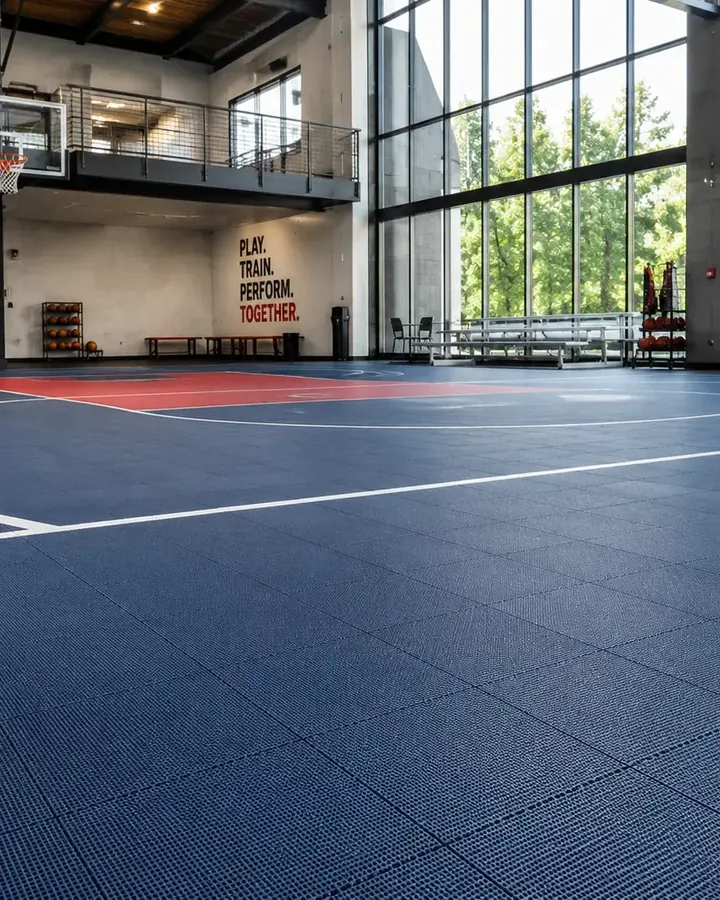
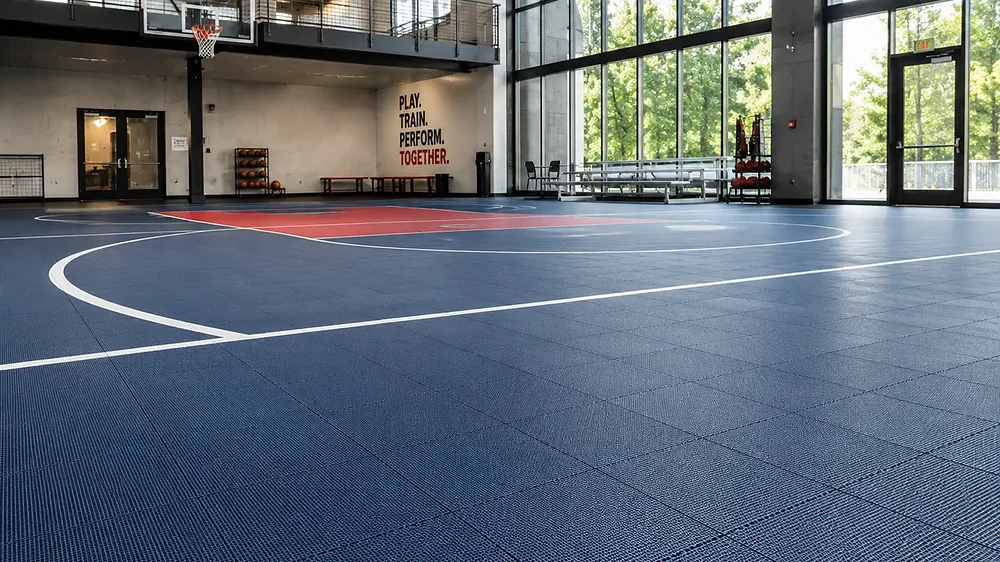
- Sports and community buildings. Fast enclosure on simple frames, often paired with PE Floors inside.
What to check before ordering
- Core type. Cores differ in thermal performance and fire behavior. Match the core to the building's code classification.
- Thickness. Thicker panels insulate better and span further. Balance this against cost and the frame spacing.
- Skin finish and color. Coatings vary in durability. Coastal and industrial sites need more robust finishes.
- Joint and fixing system. Concealed fixings give cleaner façades; exposed fixings can be simpler.
- Openings and trims. Doors, windows and corners need flashings and trims that match the system.
Speed on site
Because the panel arrives finished on both faces, there is no separate insulation, sheathing or interior lining to install. A crew can enclose large areas in days rather than weeks, which brings forward the start of interior work and protects the building sooner.
Energy and comfort
Continuous insulation with few thermal bridges keeps interior temperatures steadier and reduces HVAC loads. In hot climates that means less cooling; in cold rooms it means less energy spent holding low temperatures.
Codes
Commercial wall assemblies are regulated for fire performance. Some panel cores trigger specific testing requirements. Read our plain-English guide to cladding fire codes in the US, and confirm the tested system with your design team.
Planning a commercial enclosure? Talk to us about panel options, colors and lead times.
Frequently asked questions
What is a sandwich wall panel?
A sandwich wall panel has two outer skins, usually coated steel, bonded to an insulating core. The panel provides the exterior finish, the insulation and the interior face in a single component that is fixed to the building's frame.
Are sandwich panels energy efficient?
Yes. The continuous insulating core and tight side joints reduce heat loss and air leakage compared with many built-up wall systems, which helps lower heating and cooling loads.
Do sandwich panels meet fire codes?
It depends on the core, the panel system and how the building is classified. Panels with combustible cores have specific code requirements, including assembly testing in some cases. Confirm the tested assembly and listings with your design team and building official.